Pages

Showing posts with label animals. Show all posts

Friday, April 4, 2014

Invasive Species

Invasive species are organisms introduced into habitats in which they are not native. They are a major cause of biological diversity loss throughout the world and are considered biological pollutants. Without predators, parasites, and competitors that have kept their numbers in check, invasive species introduced into new habitats often overrun their new homes and crowd out native species. Once established, invasives can rarely be eliminated and the cost of control measures can be very high.
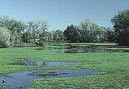
Eurasian Water MilfoilHumans cause most invasive species introductions. Invasives are carried in or on animals, vehicles, ships, commercial goods, produce and even clothing. Along the Clearwater, Snake and Columbia Rivers, there have been several introduced invasive species in the past few years, with the threat of further infestation by new species in the near future.
One invasive of particular concern is the zebra mussel. The zebra mussel is a nasty invasive species that spreads to new places by attaching to any hard surface in the water, this includes boat hulls, trailers, and fittings, and even aquatic plants. Colonies of these tiny shellfish have already infested numerous waterways in the east and midwest, causing hundreds of millions of dollars in damage through clogged pipes, ruined boat motors, and degraded fish and wildlife habitat.

Before moving your boat between bodies of water:

  • Inspect your boat, trailer, and boating equipment (anchors, centerboards, rollers, axles) and remove any plants and animals that are visible before leaving the immediate vicinity of any water body.
  • Drain water from the motor, livewell, bilge and transom wells on dry land before leaving the dock area.
  • Dispose of bait in proper disposal facilities. Never release live bait into a water body or release aquatic animals from one water body into another.
  • Wash and dry your boat, tackle, downriggers, trailer and other boating equipment to kill harmful species that were not visible at the boat launch. This can be done on your way home or once you have returned home. Be aware that some aquatic invasive species can survive more than two weeks out of the water.
  • Learn what these organisms look like. If you suspect a new infestation of an invasive plant or animal, immediately report it to your natural resource agency.
http://www.ndwt.org/ndwt/natural_world/invasive_species.asp

Endangered Species

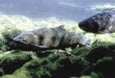
Bull TroutSeveral threatened and endangered animal species share the waters and shorelines of the Northwest Discovery Water Trail. These animals range from the western pond turtle and bald eagle, to certain species of fish, such as steelhead, bull trout and salmon. The stories of declining species and the ongoing efforts to help restore their populations are intertwined with the human stories of survival and development.
For many, salmon define the spirit of the Pacific Northwest. Salmon have been central to the culture, religion and livelihood of the region’s native people for thousands of years. Salmon are anadramous fish. This means they are born in freshwater, mature at sea and return upstream to spawn and die in the stream where their lives began. This cycle can take years and thousands of miles journeying through fresh and saltwater. There are five species of Pacific salmon found along the trail: Chinook, chum, sockeye, coho and pink.
Bull trout are no longer found throughout their native waters. Today they survive only in some upper tributary streams and several lake and reservoir systems. Some bull trout spend their entire lives close to where they hatched. They are cold water fish and more sensitive to increased water temperature, poor water quality, and low water flow than salmon.
Humans are also affected by water quality and climate conditions. Care and study of threatened and endangered species is important to us all.
For more information on endangered species go to: http://endangered.fws.gov

Other Wildlife

The variety and number of wild animals match the wide diversity of landforms found near the Northwest Discovery Water Trail. Native animals will sometimes appear in huge numbers at unexpected places or be hard to find at refuges designed to protect them. Birds, mammals, and reptiles are part of the fascinating array of sights and sounds on the river.
Water birds, such as the gull and great blue heron, join raptors like vultures, eagles and osprey overhead. At certain times flocks of hundreds of geese and swans are migrating. Numerous other seasonal or resident waterfowl can be found in marshes and wetlands. Swallows dart quickly by on their hunt for water loving insects. Songbirds use low-lying shrubs and trees to nest and feed. Deer and elk use river and stream valleys as places to browse, drink and rest. Bighorn sheep and marmots appear high above on rocky outcrops, finding patches of grasses to eat. Sightings of beaver and river otter are not uncommon.
Refuges are one way to save native habitat for plants and wildlife, and to support fish and other water dwellers. Local, state, and federal parks, natural areas, and refuges have different regulations and closures during nesting or critical times for the survival of various species. Please observe wildlife with care, watch where you are stepping on fragile shoreline, and take only pictures from these special places.
Respect wildlife. Do not approach animals or attempt to feed them. If animals approach you while on the water, it is okay to let them, but do not move toward them. When moving on, do so directly away from the animal or its current path.

Monday, February 17, 2014

Siamese crocodiles released into the wild

Hope for Siamese crocodile conservation as the second group of crocodiles is released into a secret site in southern Cambodia.
After an idle lifetime in the soupy water of a concrete pond, a young Siamese crocodile tests out a new element – the clear flowing water of a jungle river. One of eight individuals, this croclet is part of a test case release project that plans to rewild Cambodia’s rivers with this Critically Endangered species.
Fauna & Flora International (FFI) has been working to conserve Siamese crocodiles in Cambodia since rediscovering a remnant population during a survey of the Cardamom Mountains in 2000. Now numbering fewer than an estimated 300 individuals, the wild population crashed after facing multiple threats. Crocodiles were hunted for their skins, and driven out of former habitats by human encroachment; while young crocs were easily tangled and drowned in fishing nets. But for FFI’s and the Forestry Administration’s intervention, this species was doomed to slip into extinction.
In January this year, the Cambodian Crocodile Conservation Project (CCCP) released the second batch of crocodiles into a secret site in southern Cambodia. The first release in December 2012 saw 18 individuals released, including croclets bred in a specialised facility in Phnom Tamao Wildlife Rescue Centre. The site was specially chosen: a remote forested stretch of prime habitat – somewhere that crocodiles used to live before they were extirpated by hunters and fishermen.
A number of the release crocodiles were fitted with radio tracking devices, enabling the CCCP team to monitor their movements. “Tracking the crocs after release is an essential part of the work, allowing us to see how they are faring, whether they stay in this location, or move on,” said Sarah Brook, FFI Cambodia’s Species Programme Manager.


Radio tagged croc basking among flowers (carnivorous bladderwort) on the riverbank. Credit: Jeremy Holden/FFI
“Five of the original ten transmitters we placed on the crocodiles have now outlived their battery life,” says Sam Han, CCCP Manager, who leads the team that monitor the radio tagged animals. “We are still picking up signals from three of the remaining transmitters, and regularly see other crocs that weren’t tagged. They have moved up and down stream, but return to the original release site and seem to be doing well.”
Siamese crocodile in the soft-release pen. Credit: Jeremy Holden/FFI
Community wardens now visit the location each month to ensure that hunting or fishing doesn’t threaten these new colonists. So far there have been no recorded casualties.
“This project is really a test case to see if the release initiative works,” said Sarah. If it does, we eventually plan to release crocodiles into suitable, well-protected river systems across Cambodia, and truly bring this species back from the brink.
“This will be a long-term prospect, and will require cooperation from zoos and breeders around the world. But if we are successful, we could see the return of one of Cambodia’s most charismatic species – an important part of both Cambodia’s ecosystems and its culture.”


http://www.fauna-flora.org/news/siamese-crocodiles-released-into-the-wild/

Monday, February 3, 2014

10 Interesting Facts About Animals

Amazing, Fun & Interesting Facts About Animals

Beautiful Animals Collage
The term animals can be used to inculcate a large amount of creatures. Not confined only to the green jungles but they co-exist with us. We are aware of the existence of some while the rest are just a mystery. They vary  in size, variety, and most important of all in possession of unique qualities. Some disgust us, some are adorable, some are our friends but some make us pressurize our brains and surprise us with their uniqueness to such an extent that we feel awed. Here are some amazing & interesting facts about Animals

Interesting Facts About Animals

#1: Maintenance is Essential

As a beaver’s teeth never attain maturity, they must constantly nibble on objects to keep them at a manageable length.  If not looked after they would eventually make their way into their brain.

#2: Bad Attempt

Humpback whales create the loudest sound of any living creature. And you thought you scream while attempting to win that argument with the jerk, was the loudest that anyone could be. Didn’t you?

#3: Communicating Feelings

Pigs connect constantly with one another; more than 20 vocalizations have been identified that pigs use in different situations, from wooing mates to passing on the message of their hungry stomachs.

#4: Advantages of a Long Nose

Elephants can smell water up to 3 miles away, and I thought water was odourless. They are also one of the three mammals that undergo menopause – the other two being humpback whales and human females.

#5: The Immortal Jellyfish

beautiful jellyfish
Well, kind of. It is still susceptible to predators but the Turritopsis nutricula jellyfish is extremely good at recreating cells, scientists are putting in their hard work with all the knowledge in their brains to apply it to humans as well and bring about an unparalleled transformation in the human world too.

#6: Humpback Whales ‘Pop’ Tunes

It turns out; mating tunes evolves and spreads over a large population of whales. As per many scientists it’s like going viral underwater because never before such a wide population-wide cultural exchange has taken place in any other species other than humans, on such a broad scale.

#7: Penguin’s Style of Making Love

Penguins Making Love
One of the very interesting facts about animals is that they too fall in love like human beings. Gentoo penguins have got a unique style of proposing their lifemates, they propose their lover with a pebble. It is often seen in the breeding season of penguins.

#8: Being lazy

A bald eagle’s nest was found that had been used for a time period as long as 34 years, weighing over two tons, and we are always busy blaming the pandas for being the laziest.

#9: Benefits of Keeping Patience

Species entitled as Cryptoses choloepi, Bradipodicola hahneli, Cryptoses rufipictus, Cryptoses waagei and Bradyphila garbei, unheard of by a majority of us are very convenient moths that take residence in the fur of a sloth as algae covers it due to their slowness. This can be referred to as one of the best advantages taken of someone’s patience. These moths are referred to as “Slothmoths”.

#10: Being African

A majority of 6 feet tall men and women have been giving a competition against the South African earthworms that is capable of growing as large as 22 feet long, with the average length being about 6 feet long.